Introduction: Can BYD Disrupt the Midsize EV SUV Segment Again?
BYD is no longer the underdog. The Chinese electric vehicle powerhouse has already disrupted segments with models like the Dolphin and Atto 3. Now, with the 2025 BYD Sealion 6, the brand sets its sights on a higher tier—midsize electric SUVs. Slotting just below the larger Sealion 7, this upcoming EV offers sleek styling, extended range, and smart packaging aimed squarely at the Tesla Model Y, Hyundai Ioniq 5, and Volkswagen ID.4.
But hype is one thing. Real-world specs, performance, and buyer relevance are another. This deep-dive review unpacks the Sealion 6’s capabilities—not just what’s on the sheet, but why it matters for daily drivers, families, and EV converts alike.
Table of Contents
Is the 2025 BYD Sealion 6 Official?
Yes, the BYD Sealion 6 is real and officially confirmed. Originally teased in late 2023 under the codename BYD Song L, the vehicle was rebranded for export markets as part of the Sealion sub-brand. BYD’s strategy to unify its naming under the “Ocean Series” has led to a streamlined identity: the Sealion 6 is now confirmed for release in Q3 2025 in Australia, with European rollout expected by the end of the year.
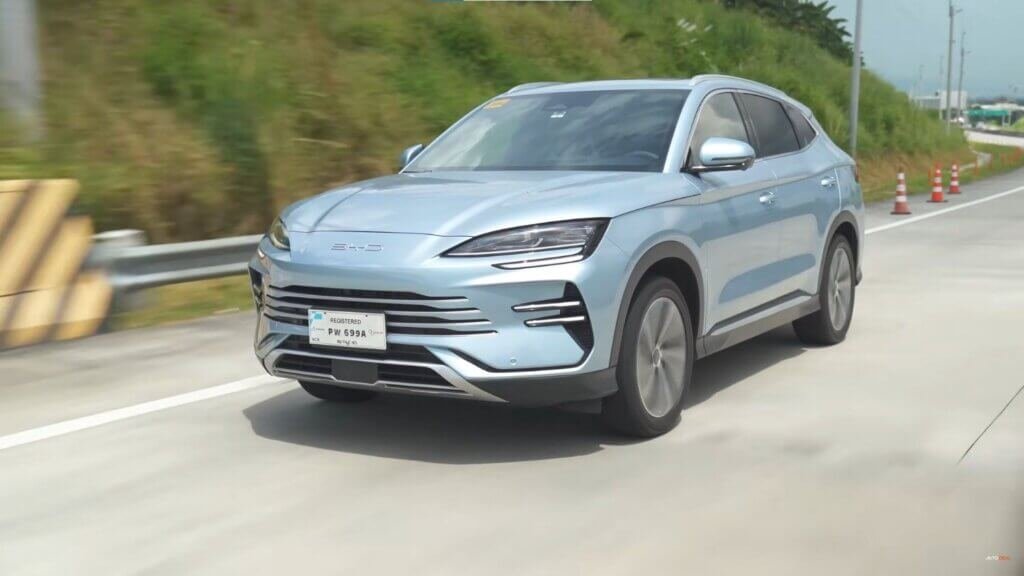
While no official date has been confirmed for North America, it may eventually reach the U.S. via import channels or partnerships—especially if BYD accelerates its global ambitions. The Sealion 6 will be built on BYD’s e-Platform 3.0, the same architecture underpinning the popular Atto 3 and Dolphin.
Technical Performance Breakdown
Powertrain & Drivetrain Options
The 2025 Sealion 6 is expected to launch with two key variants:
- Standard Range (FWD): 160 kW (214 hp), single motor
- Extended Range/Performance (AWD): 230 kW (308 hp), dual motor setup
These figures place the Sealion 6 on par with the Hyundai Ioniq 5 AWD and just shy of the Tesla Model Y Long Range. More importantly, the use of BYD’s in-house Blade Battery and electric motors helps the brand maintain vertical integration—reducing cost and improving long-term part support.
0–100 km/h and Top Speed
- FWD (Standard): 0–100 km/h in ~7.5 seconds
- AWD (Performance): 0–100 km/h in ~6.2 seconds
- Top Speed: 180 km/h (112 mph), electronically limited
While not blistering, these figures offer more than enough for urban commuting and spirited driving. BYD isn’t chasing top speed—it’s chasing usable, efficient performance.
Range, Battery Life, and Charging
Here’s where BYD’s engineering really shines. Unlike most rivals that rely on nickel-based chemistry, the Sealion 6 features BYD’s patented LFP-based Blade Battery. It’s more stable, more durable, and less prone to thermal runaway than NCM alternatives.
- Battery Sizes:
- Standard: ~71.8 kWh
- Extended Range: ~87 kWh
- Estimated WLTP Range:
- FWD: ~500 km (310 miles)
- AWD: ~460 km (286 miles)
- DC Fast Charging: Up to 150 kW
- Charging Time (30–80%): ~28–30 minutes
While it doesn’t support the fastest ultra-rapid charging like Hyundai’s 800V system, the Sealion 6 remains highly competitive—especially when factoring in LFP longevity and cost savings.
Interior, Infotainment & Cabin Comfort
BYD has made significant leaps in cabin design, and the Sealion 6 benefits from that progress. The dashboard is modern yet functional, with thoughtful ergonomics and tactile switchgear.
Cabin Highlights:
- Rotating 15.6-inch infotainment screen (portrait or landscape)
- Fully digital driver display
- Heads-up display (top trims)
- Wireless Apple CarPlay & Android Auto
- Voice assistant, OTA updates, and app integration
Materials include soft-touch plastics, vegan leather seats, and ambient lighting that can be adjusted through the infotainment interface. It’s not quite luxury-grade, but it’s more premium than the Tesla Model Y’s minimalistic approach—and far better than many legacy competitors in this price range.
Practicality:
- Seating: 5-passenger configuration
- Boot space: ~500 liters seats up, ~1,300 liters folded
- Rear legroom: Among the best in class, thanks to the long wheelbase
Ride quality leans toward comfort. BYD’s use of a MacPherson front and multi-link rear suspension setup helps isolate bumps without sacrificing too much handling composure.
Safety Tech & Driver Assistance
Like the larger Sealion 7, the Sealion 6 will ship with a full suite of advanced driver assistance systems (ADAS) to meet Euro NCAP and ANCAP 5-star criteria.
Standard and Optional Features Include:
- Forward collision warning (FCW)
- Automatic emergency braking (AEB)
- Lane-keeping assist & lane centering
- Blind-spot monitoring
- Rear cross-traffic alert
- Adaptive cruise control with stop-and-go
- 360-degree surround camera with transparent chassis view
In markets like Australia, safety performance will be crucial. BYD is positioning itself as a tech-savvy, family-friendly EV maker—and the Sealion 6 supports that branding.
Pricing & Trims: Affordable, Not Cheap
Australian dealership sources have revealed expected pricing ahead of official launch:
- Entry-Level (FWD): ~AU$52,000 (~US$34,000)
- AWD Performance Model: ~AU$58,000 (~US$38,000)
This pricing undercuts the Tesla Model Y by over AU$10,000 in most trims, and sits just above the Hyundai Kona Electric, despite offering more space and range. Incentives in Australia and Europe (such as fringe benefit tax exemptions or EV rebates) could further reduce the effective cost.
How It Compares to Segment Rivals
Let’s see how the 2025 Sealion 6 stacks up against its closest competitors:
| Model | Power (hp) | Range (km) | 0–100 km/h | Price (AU$) | Notable Advantage |
|---|---|---|---|---|---|
| BYD Sealion 6 AWD | 308 | 460 | 6.2 sec | 58,000 | Blade Battery, rotating screen |
| Tesla Model Y LR | 384 | 533 | 5.0 sec | 69,000 | Tesla ecosystem, faster charging |
| Hyundai Ioniq 5 AWD | 320 | 507 | 5.1 sec | 72,000 | 800V architecture, sleek design |
| VW ID.4 Pro AWD | 295 | 470 | 6.0 sec | 65,000 | German build quality |
For buyers prioritizing value, range, and safety, the Sealion 6 becomes an attractive option. A deeper dive into its sibling model can be found at TillDrive.
Pros and Cons (Contextualized)
What the Sealion 6 Gets Right:
- Battery durability with the LFP Blade Battery = lower degradation over time.
- Well-rounded range in both FWD and AWD variants = fewer compromises.
- Interior space and rotating infotainment screen = practical + innovative.
- Value pricing that makes EV ownership more accessible.
Where It Falls Short:
- Charging speed lags behind 800V rivals like Ioniq 5.
- Brand perception outside Asia is still growing.
- No seven-seat option, which limits appeal for larger families.
FAQ: People Also Ask About the BYD Sealion 6
What is the top speed of the BYD Sealion 6?
It’s limited to 180 km/h (112 mph).
How fast does the BYD Sealion 6 go 0–100 km/h?
AWD trims reach 0–100 in about 6.2 seconds.
How much horsepower does it have?
Between 214 hp (FWD) and 308 hp (AWD).
What’s the estimated EV range?
Up to 500 km (FWD) or 460 km (AWD) on the WLTP cycle.
What is the Sealion 6’s weight?
Approximately 1,850–2,050 kg depending on trim.
Is the Sealion 6 safe and reliable?
Yes, it’s expected to earn a 5-star ANCAP rating and uses the stable Blade Battery.
When is the official 2025 launch date?
It launches in Australia by Q3 2025, Europe later that year.
What trims or packages are available?
Two main trims: FWD Standard and AWD Performance.
How does it compare to the Tesla Model Y?
It’s cheaper, has LFP battery benefits, but charges slower and has less brand cachet.
Is the BYD Sealion 6 worth buying?
Yes, especially for buyers seeking EV practicality and safety at a lower cost.
Conclusion: Who Should Buy the 2025 BYD Sealion 6?
The 2025 BYD Sealion 6 is tailor-made for value-focused EV buyers who don’t want to compromise on range, space, or safety. Whether you’re a commuter looking to ditch petrol or a young family entering the EV world, the Sealion 6 delivers standout features in a smartly priced package.
It’s not the flashiest, but it’s arguably one of the most well-rounded EV SUVs arriving in 2025. With BYD’s growing global support network and a platform proven across multiple markets, the Sealion 6 could easily become a mainstream favorite—especially in regions where price-conscious consumers demand substance over badges.