Introduction
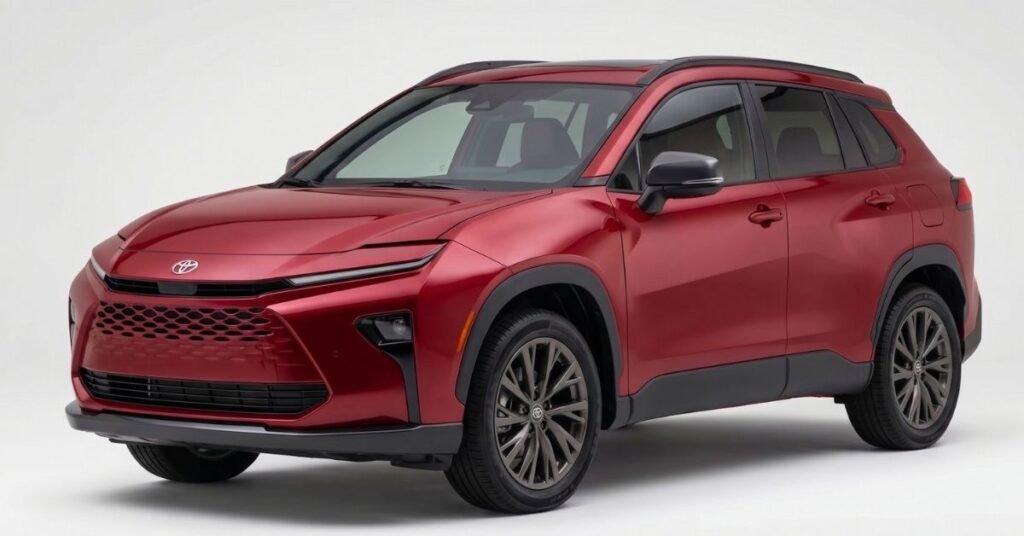
The biggest fact about the 2026 Toyota Venza is also the easiest one to miss: there is no 2026 Venza in Toyota’s U.S. lineup.
Toyota ended the second-generation Venza after the 2024 model year, making the 2024 Venza the final U.S.-market model. Toyota’s own website now lists the Venza as a discontinued vehicle and directs shoppers toward the Toyota Crown Signia, which occupies a similar two-row hybrid SUV position.
That distinction matters because searches for “2026 Toyota Venza” can easily produce misleading specifications, prices or trim information presented as though a new model exists. It does not. The most relevant vehicle for understanding the nameplate today is the 2021-2024 second-generation Venza, particularly the unchanged 2024 model year.
The Venza remains interesting precisely because it took a different approach to the mainstream SUV formula. It combined a relatively compact footprint with a standard hybrid powertrain, standard all-wheel drive, upscale cabin technology and an emphasis on quiet, efficient road use rather than off-road capability. The result was distinctive, but Toyota ultimately chose to replace it rather than continue the nameplate.
What Happened to the Toyota Venza?
Toyota revived the Venza name for the 2021 model year after previously using it on a larger crossover sold in the U.S. from 2009 through 2015. Toyota’s U.S. newsroom identifies the earlier vehicles as the first-generation Venza and the 2021-2024 vehicles as the later generation.
The second-generation Venza was a very different vehicle from its predecessor. It was a five-seat crossover built on Toyota’s TNGA-K platform and positioned between more conventional compact and midsize SUV offerings. Its mechanical formula was unusually simple: a 2.5-liter four-cylinder engine, three electric motors, a continuously variable transmission and standard electronic all-wheel drive.
For 2024, Toyota made no major changes. That year became the Venza’s final model year before the model was discontinued and replaced by the Crown Signia.
So, for buyers searching in 2026, the correct interpretation is:
There is no new 2026 Toyota Venza for the U.S. market. The latest U.S. Venza is the 2024 model.
That makes the Venza primarily a used-car proposition in 2026 rather than a new-car purchase.
The 2024 Toyota Venza Is the Latest U.S. Version
The 2024 Venza represented the mature form of the second-generation design. Toyota offered the vehicle in LE, XLE, Nightshade Edition and Limited configurations. The powertrain remained identical across the range, so buyers were choosing trims primarily for equipment, appearance and cabin technology rather than different engines or drivetrains.
The basic architecture was one of the Venza’s strongest attributes. Toyota’s TNGA-K platform was also used across a wider family of Toyota vehicles, giving the Venza a technical foundation shared with larger and more substantial products in the company’s lineup.
The Venza’s unusual positioning was deliberate. It was not intended to be an off-road SUV like a 4Runner, nor was it simply a more practical RAV4. Instead, Toyota gave it a more polished exterior, a quieter and more technology-focused cabin, and standard hybrid AWD.
That positioning explains both its appeal and its eventual problem: the Venza occupied a relatively narrow space in Toyota’s increasingly crowded SUV portfolio.
Design and Exterior
The second-generation Venza was designed as a sleek crossover rather than a rugged utility vehicle.
Its dimensions help explain the formula. The 2024 Venza measured 186.6 inches long, 73.0 inches wide and 65.9 inches high, with a 105.9-inch wheelbase.
Those measurements put the Venza in an interesting middle ground. It had the footprint of a manageable everyday crossover, but its proportions and lower roofline gave it a more car-like appearance than many conventional SUVs.
Toyota also offered several features designed to make the Venza feel more upscale.
The available Star Gaze fixed panoramic roof was one of its most distinctive features. Its electrochromic glass could change between transparent and frosted modes at the push of a button. It was available on the Nightshade and Limited grades.
The Nightshade Edition took a different visual approach, adding black exterior badging, black roof rails, black wheels and other darkened exterior details. It was essentially the Venza’s style-focused trim rather than a mechanical performance package.
The design therefore worked best for buyers who wanted an SUV without the visual bulk or overt adventure branding that increasingly dominates the segment.
Interior and Comfort
Inside, the Venza emphasized technology and atmosphere over maximum cargo volume.
Toyota gave the crossover a five-seat cabin, with 40.9 inches of front legroom and 37.8 inches of rear legroom. Passenger volume was listed at 98.3 cubic feet on models without the Star Gaze roof.
The interior was also one of the clearest places where Toyota differentiated the Venza from the less expensive RAV4.
Depending on trim, buyers could get a large 12.3-inch multimedia display, a digital instrument cluster, digital rearview mirror, heated and ventilated front seats, JBL premium audio and the electrochromic panoramic roof.
The trade-off was cargo capacity.
The Venza offered 28.8 cubic feet behind the rear seats and 55.1 cubic feet with the rear seats folded.
Those numbers are respectable, but the Venza’s interior was not designed around maximum hauling ability. Buyers who prioritize bulky cargo, family gear or maximum rear-seat utility may find a more conventional SUV better suited to their needs.
That is an important distinction when evaluating the Venza today. Its appeal was not “the most useful SUV for the money.” Its appeal was a blend of efficiency, styling, comfort and technology in a relatively compact package.
Engine, Hybrid Powertrain and Performance
Every U.S.-market second-generation Venza used a 2.5-liter four-cylinder hybrid powertrain.
The system produced 219 combined net horsepower, with electric motors providing power at both ends of the vehicle. Toyota paired the system with an electronically controlled continuously variable transmission and standard Electronic On-Demand All-Wheel Drive.
The arrangement is significant because the Venza did not use a conventional mechanical all-wheel-drive system.
An electric motor at the rear axle could provide traction when required, allowing Toyota to give every Venza AWD without adding a traditional driveshaft-based system. That made AWD part of the vehicle’s standard character rather than an expensive option.
The result was competent rather than sporty.
Independent testing of the Venza recorded a 7.6-second 0-to-60-mph time, which is adequate for daily driving but hardly performance-oriented.
That matches the vehicle’s broader philosophy. The Venza was designed to make everyday travel efficient and comfortable, not to turn a family crossover into a sports utility vehicle.
The hybrid system’s ability to deliver immediate electric assistance also helps the Venza feel responsive around town. But the continuously variable transmission and efficiency-focused calibration make it more naturally suited to relaxed driving than aggressive acceleration.
Fuel Economy: One of the Venza’s Strongest Arguments
Efficiency was arguably the Venza’s most convincing mechanical advantage.
Toyota rated the 2024 Venza at:
| Specification | 2024 Toyota Venza |
|---|---|
| Powertrain | 2.5L 4-cylinder hybrid |
| Combined output | 219 hp |
| Transmission | Electronically controlled CVT |
| Drivetrain | Standard electronic AWD |
| Fuel economy | 40 city / 37 highway / 39 combined mpg |
| Seating | 5 |
| Cargo behind rear seats | 28.8 cu. ft. |
| Maximum cargo volume | 55.1 cu. ft. |
| Length | 186.6 in. |
| Width | 73.0 in. |
| Height | 65.9 in. |
| Wheelbase | 105.9 in. |
| Fuel tank | 14.5 gal. |
Toyota’s published specifications confirm the 39-mpg combined rating across the 2024 Venza lineup.
That combination of nearly 40 mpg, five-passenger seating and standard AWD remains attractive in the used market.
It is also worth noting what the Venza was not. It was a conventional hybrid rather than a plug-in hybrid, so there was no external charging requirement or meaningful electric-only driving range comparable to a PHEV.
For someone who wants hybrid efficiency without changing charging habits, that simplicity remains one of the Venza’s strongest ownership arguments.
Technology and Infotainment
The Venza was unusually technology-heavy for its position in Toyota’s lineup.
The 2024 LE used an 8-inch Toyota Audio Multimedia touchscreen, while the XLE received a 12.3-inch display. Wireless Apple CarPlay and Android Auto were standard, and the system supported over-the-air updates.
Higher trims could add:
- 12.3-inch digital instrument display
- JBL nine-speaker premium audio
- Digital rearview mirror
- Head-up display
- Wireless smartphone charging
- Cloud-based navigation through available connected services
- Wi-Fi connectivity
- Hands-free power liftgate
The Limited was particularly well equipped, including a 12.3-inch digital gauge cluster and premium audio system. Toyota’s JBL system used nine speakers and a 1,200-watt amplifier.
The technology package is important in the context of a 2026 used-car search. A well-equipped 2024 Venza can still feel modern because its infotainment and connectivity hardware were significantly updated compared with earlier Toyota systems.
Safety
Safety was another major part of the Venza’s proposition.
Toyota equipped the 2024 model with Toyota Safety Sense 2.5+, including technologies such as a pre-collision system with pedestrian detection, lane-departure alert and other driver-assistance functions. Blind-spot monitoring with rear cross-traffic alert was also standard.
The Venza also earned an IIHS Top Safety Pick designation for 2024. However, the detailed IIHS results are more nuanced than the award alone suggests. The Venza received Good ratings in several major crash evaluations, while its updated moderate-overlap front test was rated Marginal and its updated side test Acceptable.
That distinction is worth preserving.
Calling the Venza simply “one of the safest SUVs” would oversimplify the evidence. A more accurate assessment is that it offers a strong standard driver-assistance package and earned a Top Safety Pick designation, while its individual crash-test results contain both strong and less impressive areas.
That is the kind of detail prospective used-car buyers should examine rather than relying on an award badge alone.
Trim Levels and Original Pricing
The 2024 Venza lineup was centered around four configurations.
Venza LE
The LE was the entry point and arguably the most rational choice for buyers primarily interested in the hybrid powertrain and AWD.
It included the 219-hp hybrid system, 39-mpg combined rating, 8-inch touchscreen, wireless smartphone integration and Toyota Safety Sense 2.5+.
Venza XLE
The XLE moved the vehicle further toward the premium end of the mainstream crossover market. It added features such as heated front seats, larger wheels, additional convenience equipment and the larger 12.3-inch multimedia display.
Venza Nightshade Edition
The Nightshade was principally an appearance-oriented upgrade. Black exterior trim and gloss-black 19-inch wheels gave the Venza a more aggressive look without changing its underlying hybrid powertrain.
Venza Limited
The Limited represented the luxury-oriented end of the Venza range, adding features such as JBL audio, a digital instrument cluster, premium seating surfaces, ventilated front seats, additional camera technology and access to the Star Gaze roof.
Toyota’s 2024 fleet guide listed starting MSRPs of $34,120 for the LE, $38,330 for the XLE and $42,265 for the Limited, before destination and other applicable charges; the Nightshade occupied the middle of the lineup.
These are historical 2024 prices, not 2026 new-car prices. There is no 2026 Venza MSRP because Toyota did not produce a 2026 U.S. Venza.
Reliability and Ownership in 2026
The Venza’s biggest ownership advantage may be the relative simplicity of its hybrid strategy.
Toyota used the company’s established 2.5-liter hybrid architecture rather than introducing an entirely new propulsion concept for the Venza. The vehicle also benefited from Toyota’s broader hybrid experience.
However, buyers shopping for one in 2026 should distinguish Toyota’s reputation for hybrid durability from a claim that every individual Venza will be trouble-free. Used-car condition, service history, mileage, accident history and battery health all matter.
The warranty package on a new 2024 Venza included Toyota’s basic 36-month/36,000-mile warranty, a 60-month/60,000-mile powertrain warranty and an eight-year/100,000-mile warranty for covered hybrid components. The high-voltage battery received a 10-year/150,000-mile warranty, whichever came first from original date of first use when sold new.
For a used Venza in 2026, remaining warranty coverage therefore depends heavily on its original in-service date and mileage.
The practical ownership checklist is straightforward: verify maintenance records, inspect the hybrid system, check tire condition, review accident history and confirm the remaining battery and hybrid-system warranty using the vehicle identification number.
The Venza’s Biggest Strengths
The Venza makes the most sense when its strengths are considered together rather than individually.
Its strongest qualities include:
- Excellent official fuel economy for an AWD crossover
- Standard all-wheel drive
- Proven Toyota hybrid architecture
- Quiet, upscale cabin character
- Attractive and relatively distinctive exterior
- Strong standard safety technology
- Five-passenger practicality
- Modern infotainment in later models
- Available premium features uncommon in mainstream compact SUVs
- Relatively manageable exterior dimensions
The key is that none of these features alone makes the Venza exceptional. The appeal comes from the combination.
The Venza’s Biggest Weaknesses
The compromises are equally important.
The Venza offers less cargo capacity than some practical SUV alternatives, and its driving character is more relaxed than sporty. Its rear-seat and luggage accommodations are adequate rather than class-leading.
It also occupies an awkward position in Toyota’s lineup. A buyer wanting maximum utility could look toward a RAV4 or Highlander depending on requirements, while someone wanting a more premium two-row Toyota crossover now has the Crown Signia.
The Venza’s discontinuation is therefore not necessarily evidence that it was a bad vehicle. It is better understood as a product-positioning decision in a crowded SUV portfolio.
Venza vs. Its Main Alternatives
Toyota Venza vs. Toyota RAV4 Hybrid
The RAV4 Hybrid is the more practical choice for many buyers. It offers a more conventional SUV shape and a stronger utility-focused identity.
The Venza counters with a more upscale cabin, sleeker design and a more premium personality.
For maximum practicality, the RAV4 is the easier recommendation. For style and refinement, the Venza has the more distinctive proposition.
Toyota Venza vs. Toyota Crown Signia
This is the most important comparison in 2026.
The Crown Signia directly replaced the Venza in Toyota’s U.S. lineup. It remains a two-row hybrid crossover, but it is larger and more powerful, with 243 horsepower and standard AWD. It also offers more cargo and towing capability than the Venza.
The trade-off is price. The 2025 Crown Signia launched with a substantially higher starting MSRP than the final Venza.
That makes the Venza particularly interesting as a used purchase: shoppers can potentially obtain much of the same basic hybrid philosophy at a lower used-vehicle price.
Toyota Venza vs. Honda Passport
The Honda Passport is a different interpretation of the midsize SUV. It emphasizes power, space and utility rather than hybrid efficiency.
If fuel economy is a major priority, the Venza’s 39-mpg combined rating gives it a significant advantage. If cargo space, stronger acceleration and utility are more important, the Passport’s formula may be preferable.
Toyota Venza vs. Hyundai Santa Fe
The Santa Fe’s newer generations emphasize space, design and technology. It is a more family-oriented SUV proposition, especially for buyers who value passenger and cargo flexibility.
The Venza’s advantage is its simpler hybrid-only identity and standard AWD combined with strong fuel economy.
Who Should Buy It?
The 2024 Toyota Venza makes the most sense in 2026 for a used-car buyer who wants:
- A fuel-efficient crossover
- Standard AWD
- Five-seat capacity
- A quieter and more upscale feel than a basic compact SUV
- Modern Toyota infotainment
- Hybrid efficiency without plug-in charging
- A distinctive alternative to the ubiquitous RAV4
It is particularly compelling for someone who values commuting efficiency and comfort more than maximum cargo capacity or off-road ability.
The Venza is also worth considering for buyers who like the Crown Signia’s basic philosophy but find its new-car positioning too expensive.
Who Should Consider Alternatives?
The Venza is less convincing for buyers who need maximum practicality.
A RAV4 Hybrid makes more sense if cargo flexibility and conventional SUV utility are priorities. A Highlander Hybrid is more appropriate for buyers who need additional passenger capacity.
The Crown Signia is the natural newer replacement for shoppers who want a current Toyota with a similar two-row hybrid crossover mission. Toyota itself now points Venza shoppers toward the Crown Signia.
And if performance, towing or serious off-road capability is high on the priority list, the Venza’s efficiency-focused setup is simply not the right tool.
FAQ
Is there a 2026 Toyota Venza?
No. Toyota discontinued the Venza after the 2024 model year in the U.S. There is no 2026 Venza available as a new U.S.-market model. Toyota replaced it with the Crown Signia.
What is the latest Toyota Venza model year?
The 2024 Toyota Venza is the final U.S.-market model year. Toyota’s 2024 Venza was essentially a carryover from 2023, making it the latest version of the second-generation Venza.
How much horsepower does the Toyota Venza have?
The second-generation U.S. Venza has 219 combined net horsepower from its 2.5-liter four-cylinder hybrid powertrain and electric motors.
Is the Toyota Venza AWD?
Yes. All second-generation U.S. Venzas came with Electronic On-Demand All-Wheel Drive as standard equipment.
How fuel efficient is the Toyota Venza?
The 2024 Venza is EPA-rated at 40 mpg city, 37 mpg highway and 39 mpg combined across its trim lineup.
Is the Toyota Venza reliable?
The Venza benefits from Toyota’s established hybrid technology, but reliability should be evaluated on an individual used vehicle. Maintenance history, mileage, accident history and hybrid-system condition are more useful indicators than assuming every Venza will have identical long-term reliability.
Is the Toyota Venza a good used car in 2026?
It can be an appealing used vehicle for buyers who prioritize hybrid fuel economy, AWD, comfort and technology. Its main disadvantages are limited cargo capacity compared with more utility-focused SUVs and the fact that the nameplate is no longer in production.
What replaced the Toyota Venza?
The Toyota Crown Signia replaced the Venza as Toyota’s two-row hybrid SUV offering in the U.S. for 2025. The Crown Signia uses a 243-hp hybrid AWD powertrain and is larger and more capable than the outgoing Venza.
Final Verdict
The 2026 Toyota Venza does not exist as a new U.S.-market model, and that is the most important fact for anyone searching for one today. The latest Venza is the 2024 model, which closed the book on Toyota’s second attempt at the nameplate.
That does not make the Venza irrelevant.
In fact, the end of production may make the final-generation Venza more interesting as a used crossover. Its formula remains unusually coherent: a 219-hp hybrid system, standard AWD, approximately 39 mpg combined, a five-seat cabin and technology that still looks reasonably modern.
Its weaknesses are equally clear. Cargo capacity is modest for an SUV, performance is adequate rather than exciting, and Toyota’s decision to replace it with the larger Crown Signia confirms how difficult its middle-ground position was to sustain.
For a new Toyota buyer in 2026, the Crown Signia is the logical successor. For a used-car shopper, however, the 2024 Venza can offer something increasingly uncommon: an efficient AWD crossover with a premium-leaning personality that does not require buying the newest and most expensive vehicle in the lineup.