The 2027 Nissan Rogue Hybrid enters one of America’s most competitive SUV segments with an unusual proposition: electric motors drive its wheels, but there is no charging cable, no plug-in routine, and no conventional transmission connecting its gasoline engine to the wheels.
That distinction makes the redesigned Rogue more interesting than another familiar hybrid option. While Toyota and Honda have spent years refining their fuel-efficient SUVs, Nissan is introducing its third-generation e-POWER system to the American market, promising the smoothness of electric propulsion with the convenience of gasoline refueling.
Officially unveiled on September 21, 2026, the new Rogue Hybrid starts at $35,490 before destination charges, produces 225 horsepower and is estimated to achieve up to 38 mpg combined. Every configuration includes dual-motor all-wheel drive.
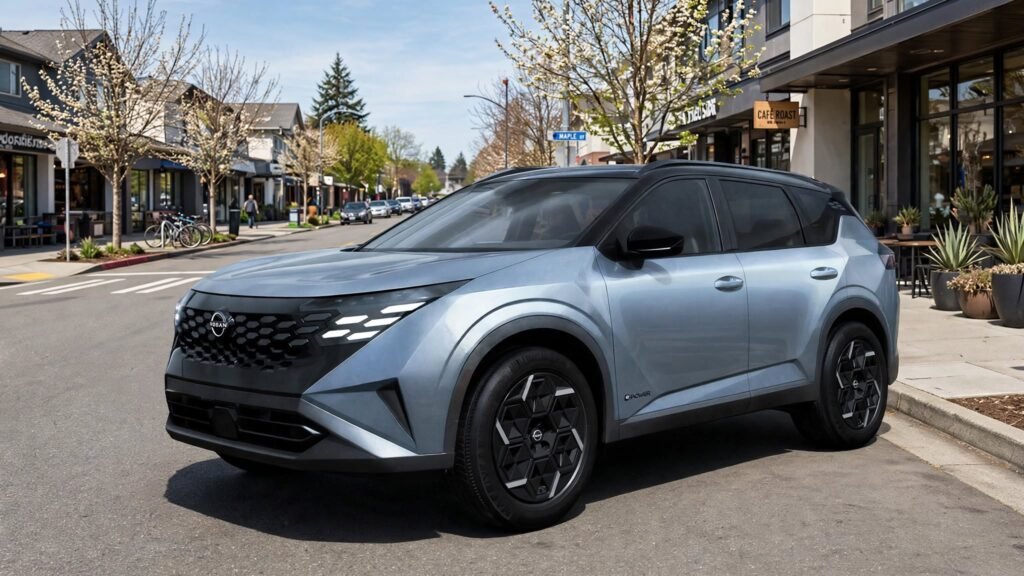
Those numbers establish it as a serious alternative to the Toyota RAV4 Hybrid and Honda CR-V Hybrid, although they do not automatically make it the most economical or practical choice.
The real question is whether Nissan’s distinctive powertrain, technology-rich interior and standard AWD offer enough advantages to overcome its relatively modest cargo capacity, higher-priced initial launch configuration and unproven long-term ownership record.
What Is New About the 2027 Nissan Rogue Hybrid?
Nissan has given its hybrid Rogue a redesigned exterior, a new electrified powertrain and a significantly updated interior. It is positioned as a separate offering alongside the conventional gasoline Rogue rather than merely an optional engine for an otherwise identical vehicle.
Its most significant difference is mechanical. The Rogue Hybrid uses a gasoline engine to generate electricity, while electric motors handle propulsion.
Other notable changes include a more angular front design, standard dual 12.3-inch displays, available dual 14.3-inch screens, upgraded driver-assistance systems and a revised cabin with greater attention to storage and passenger convenience.
Nissan has also introduced an SR trim with sportier exterior detailing, while the Platinum focuses on premium technology and comfort equipment.
Unlike older discussions that treated the 2027 Rogue Hybrid as an unconfirmed future model, the vehicle now has official specifications and announced U.S. pricing.
However, its launch is staged, meaning not every configuration will be available immediately.
2027 Nissan Rogue Hybrid Release Date and Availability
The first 2027 Nissan Rogue Hybrid vehicles are expected to reach U.S. dealerships in November 2026, initially in limited quantities.
Early availability is restricted to the SR trim equipped with the Technology Package. This configuration starts at $41,490 before Nissan’s $1,575 destination charge.
The broader range, including the more affordable SV, standard SR and flagship Platinum, is expected in January 2027.
This staggered launch creates an important purchasing decision.
Someone interested primarily in affordable hybrid transportation could spend considerably more by purchasing the first available configuration rather than waiting for the base SV.
The difference between the entry-level SV and the initially available SR Technology Package is $6,000 before taxes and other charges.
For buyers who do not need the larger displays, advanced camera system or additional driver-assistance technology, that premium may be difficult to justify.
Dealership inventory, color selection and actual delivery timing will depend on local allocation and demand.
Nissan also continues to offer a conventional gasoline-powered 2027 Rogue, so buyers who want a new Rogue immediately do not necessarily need to wait for the hybrid.
How Does Nissan’s e-POWER Hybrid System Work?
The 2027 Rogue Hybrid uses Nissan’s third-generation e-POWER architecture, which approaches hybrid driving differently from most conventional gasoline-electric SUVs.
A dedicated 1.5-liter turbocharged three-cylinder engine generates electricity. That energy is supplied through the vehicle’s electrical system to its driving motors and lithium-ion battery.
The crucial distinction is that the gasoline engine does not mechanically drive the wheels.
Instead, electric motors provide all propulsion.
This arrangement is called a series hybrid. It allows Nissan to deliver some characteristics associated with a battery-electric vehicle while retaining the ability to refuel at an ordinary gas station.
Does the Rogue Hybrid need to be plugged in?
No. The 2027 Rogue Hybrid is not a plug-in hybrid.
The gasoline engine generates electricity as necessary, while regenerative braking recovers some energy that would otherwise be lost during deceleration.
Its 1.67-kWh lithium-ion battery acts as an energy buffer rather than a large rechargeable pack designed for extended electric-only commuting.
Owners do not need home charging equipment, a public charging account or access to a charging station.
This could make the Rogue particularly appealing to apartment residents or drivers who like electric-motor propulsion but are not ready to depend on external charging.
Does the 2027 Rogue Hybrid have a CVT?
No. The e-POWER model does not use the conventional continuously variable transmission associated with many gasoline-powered Nissan vehicles.
Its electric motors drive through fixed-ratio reduction gearing.
That does not mean the entire drivetrain is mechanically simple, but it eliminates the need for a traditional transmission to coordinate gasoline-engine speed with road speed.
Engine operation is instead managed according to electrical demand, battery condition and efficiency requirements.
The result should be a different driving character from a conventional gasoline Rogue, particularly during acceleration and stop-and-go traffic.
Is e-POWER better than a conventional hybrid?
Not necessarily in every respect.
Toyota’s hybrid systems can combine mechanical gasoline-engine power and electric propulsion. Nissan’s series-hybrid arrangement relies entirely on electricity generated or stored onboard before delivering power to the wheels.
Nissan’s approach offers a distinctive electric-drive character, while a well-developed conventional hybrid may achieve greater overall fuel efficiency under certain conditions.
The best technology ultimately depends on measured performance, fuel consumption, refinement, purchase price and long-term ownership experience rather than the number of electric motors involved.
Engine, Horsepower, AWD and Performance
The Rogue Hybrid produces 225 combined system horsepower from its gasoline generator and electric-drive system.
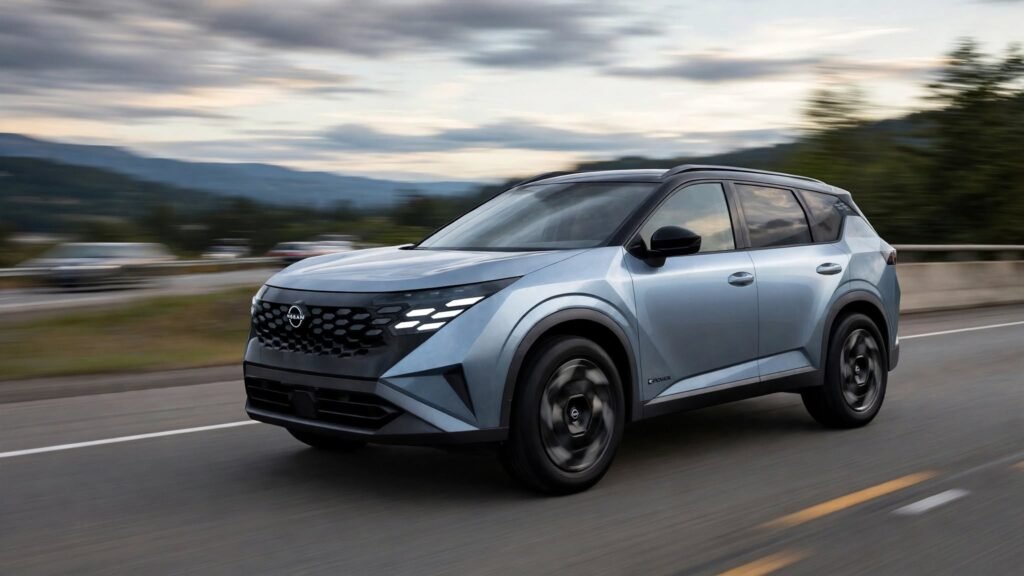
Its front electric motor is rated at 202 horsepower and 243 lb-ft of torque, while the rear motor is rated at 134 horsepower and 144 lb-ft.
These individual motor outputs should not be added together. Total system output is limited by the electrical architecture, which is why Nissan specifies 225 horsepower overall.
This gives the Rogue a competitive output for a compact hybrid SUV, although horsepower alone cannot establish acceleration performance.
Is the 2027 Rogue Hybrid AWD?
Yes. Every announced U.S. Rogue Hybrid configuration includes dual-motor all-wheel drive as standard equipment.
Rather than using a traditional mechanical connection to distribute power between the axles, the vehicle uses separate front and rear electric motors.
Its control system can adjust torque distribution according to road conditions and traction demands.
That should offer useful flexibility during rain, snow and uneven road conditions, although AWD cannot replace winter tires or overcome poor braking traction.
The Rogue also includes selectable driving modes for different conditions, including Snow and Off-Road settings.
With 8.4 to 8.5 inches of ground clearance depending on trim, it offers useful clearance for an everyday crossover, but it should not be confused with a dedicated off-road SUV.
How fast is the Nissan Rogue Hybrid?
Nissan has not established a verified production-model 0–60 mph acceleration figure or an independently confirmed top speed for the new Rogue Hybrid.
Early prototype evaluations have described prompt acceleration and a notably electric-like power delivery.
Those observations are encouraging, but prototype performance should not be treated as a guaranteed result for customer vehicles.
The 225-hp system output suggests competitive everyday performance for highway merging and overtaking. Its actual acceleration, passing performance and efficiency at sustained highway speeds still require independent production-model testing.
What is e-Pedal with Smooth Stop?
The Rogue Hybrid introduces an e-Pedal function that allows drivers to accelerate and decelerate primarily using the accelerator pedal.
Lifting off increases regenerative deceleration, and the system can bring the vehicle to a complete stop.
Nissan’s Smooth Stop technology then manages the final phase of braking to reduce the abrupt body movement sometimes felt when a vehicle stops.
This combination could be especially useful in congested urban driving, where repeated acceleration and braking can become tiring.
The conventional brake pedal remains essential for stronger braking demands and emergency situations.
2027 Nissan Rogue Hybrid MPG and Driving Range
Fuel economy will play a major role in determining how successfully the Rogue competes against established hybrids.
Nissan estimates up to 41 mpg in the city and 38 mpg combined, depending on configuration.
Fuel Economy by Trim
| Trim | City MPG | Highway MPG | Combined MPG |
|---|---|---|---|
| SV AWD | 41 | 35 | 37 |
| SR AWD | 41 | 36 | 38 |
| Platinum AWD | 41 | 35 | 37 |
These are manufacturer estimates based on Nissan’s internal testing. Final EPA-certified ratings had not been established at the time of this article’s October 2026 verification.
The SR’s 38-mpg combined estimate is the strongest figure in the announced range.
Interestingly, the difference is relatively small. The SV and Platinum are estimated to return just one fewer mile per gallon combined.
Buyers therefore have little reason to choose a particular trim solely because of fuel economy.
How far can the Rogue Hybrid travel on one tank?
The Rogue Hybrid has a 14-gallon gasoline tank.
Using Nissan’s combined estimates produces a simple theoretical calculation of approximately 518 miles for the 37-mpg configurations and 532 miles for the 38-mpg SR.
Those figures are not official driving-range ratings.
Real-world distance will depend on speed, temperature, terrain, vehicle load, driving habits and usable fuel remaining in the tank.
Nevertheless, the combination of hybrid efficiency and conventional refueling could make the Rogue attractive to drivers who frequently cover long distances without wanting to plan charging stops.
Is the Rogue Hybrid more efficient than its competitors?
Not across the board.
The Toyota RAV4 Hybrid offers configurations with higher rated combined fuel economy, particularly when comparing efficiency-focused versions.
The Honda CR-V Hybrid also delivers competitive results, with ratings varying according to drivetrain and trim.
Nissan’s estimates put it comfortably within the mainstream hybrid SUV conversation, but they do not establish it as the segment’s fuel-economy leader.
That matters because the Rogue’s most persuasive advantage may be how its powertrain operates rather than simply how little fuel it consumes.
Independent testing will be important before making a definitive efficiency judgment.
2027 Nissan Rogue Hybrid Price and Trims
Nissan offers three principal trim levels: SV, SR and Platinum. Optional equipment packages create five advertised pricing configurations.
Official U.S. Prices
| Model | Starting MSRP | With Destination |
|---|---|---|
| Rogue Hybrid SV AWD | $35,490 | $37,065 |
| Rogue Hybrid SV Premium AWD | $37,590 | $39,165 |
| Rogue Hybrid SR AWD | $37,490 | $39,065 |
| Rogue Hybrid SR Technology AWD | $41,490 | $43,065 |
| Rogue Hybrid Platinum AWD | $43,490 | $45,065 |
All prices are in U.S. dollars. Destination and handling add $1,575. Taxes, title, registration, accessories and dealer charges are excluded.
Rogue Hybrid SV: The sensible starting point
The SV begins at $35,490 and includes considerably more than the basic hybrid powertrain.
Standard equipment includes dual 12.3-inch displays, wireless Apple CarPlay, wireless Android Auto, heated front seats, dual-zone climate control, rear air vents, a power liftgate, remote engine start and Qi2 wireless phone charging.
It also features standard dual-motor AWD and Nissan’s core driver-assistance technology.
For buyers who mainly want efficient transportation, family practicality and a contemporary cabin, the SV covers many everyday requirements without moving into luxury-SUV pricing.
Its 18-inch wheels may also appeal to owners who prefer a less expensive tire size than the 19-inch wheels used on higher trims.
SV Premium: A comfort-focused upgrade
The SV Premium Package costs an additional $2,100.
It adds features including a panoramic moonroof, upgraded TailorFit synthetic-leather seating, driver lumbar adjustment and gloss-black roof rails.
This configuration costs $39,165 including destination.
It represents a reasonable upgrade for drivers who want a more upscale interior without paying for the larger screens and additional equipment associated with the SR Technology Package.
The main decision is whether those comfort improvements matter enough to justify the added expense.
SR: A sportier appearance without a major price increase
The standard SR starts at $37,490.
It gains a more aggressive exterior treatment, 19-inch alloy wheels, additional gloss-black detailing and upgraded synthetic-leather seating.
The SR is particularly interesting because it carries the range’s highest estimated combined MPG figure.
Its sportier appearance does not automatically establish better handling or acceleration, however. The underlying hybrid system remains the same 225-hp setup.
For buyers who prefer the SR styling, the $2,000 premium over the SV is relatively modest.
SR Technology Package: More capability, but a substantial jump in price
The $4,000 SR Technology Package adds dual 14.3-inch displays, Google built-in, enhanced surround-view cameras, memory settings for the driver and mirrors, a heated steering wheel, parking assistance and advanced ProPILOT features.
It also brings the panoramic moonroof and additional convenience equipment.
At $43,065 including destination, it approaches the price of the flagship Platinum.
Its main advantage is availability. This is the configuration Nissan expects to offer first in November 2026.
Buyers who do not urgently need a vehicle should compare it carefully with the Platinum rather than assuming the first available Rogue Hybrid is the best deal.
Platinum: The most complete Rogue Hybrid
The Platinum starts at $43,490 before destination.
It includes the larger displays, a 10-speaker Bose audio system, heated rear seats, ventilated front seats, premium cabin materials, a head-up display and a more comprehensive driver-assistance package.
The price difference between the SR Technology Package and Platinum is only $2,000.
That makes Platinum worth considering for shoppers already prepared to spend more than $41,000 before destination.
However, the Platinum does not provide additional combined system horsepower, substantially greater cargo capacity or better estimated fuel economy.
TillDrive’s preliminary value choice: The SV appears to offer the strongest everyday value. The SR is attractive for buyers who prefer its styling, while Platinum makes more sense than SR Technology for shoppers who genuinely want the fullest equipment package and can wait for availability.
Exterior Design, Dimensions and Practicality
The redesigned Rogue Hybrid moves away from the softer appearance of previous Rogues toward a more geometric and angular design.
Its front end features a prominent honeycomb-style grille, integrated LED lighting and stronger body contours.
The SR adds sportier visual elements, while higher-end configurations offer more elaborate lighting details and two-tone paint options.
The overall proportions remain recognizable as a compact family SUV.
2027 Rogue Hybrid Dimensions
| Measurement | Specification |
|---|---|
| Length | 183.1 inches |
| Width | 72.8 inches |
| Height | 67.7 inches |
| Wheelbase | 106.5 inches |
| Ground clearance | 8.4–8.5 inches |
| Turning diameter | 36.9 feet |
| Seating | 5 passengers |
These dimensions should make the Rogue manageable in ordinary parking spaces while providing enough cabin room for daily family use.
Available surround-view cameras offer additional assistance in tight spaces, although they do not eliminate blind spots.
Cargo capacity and rear-seat space
The Rogue Hybrid provides 31.1 cubic feet of cargo space behind its rear seats in the normal seating configuration and up to 65.9 cubic feet when the second row is folded.
With the rear seats moved to their forward-most position, Nissan lists up to 34.4 cubic feet behind them.
That offers room for groceries, luggage and everyday equipment, although it falls short of some major competitors in outright volume.
The Honda CR-V Hybrid and Toyota RAV4 Hybrid provide more maximum cargo capacity based on currently published comparable specifications.
The Rogue’s rear-seat legroom measures 36.2 inches. This is another area where the CR-V offers an advantage, especially for families regularly carrying tall adults.
However, Nissan has paid attention to practical usability.
The rear doors open nearly 90 degrees, making it easier to place children into car seats. The rear bench reclines and uses a 60/40 split-folding arrangement.
Nissan has also designed the rear LATCH arrangement to provide flexibility for installing child restraints in the center position.
Whether three child seats will actually fit depends on their dimensions, installation methods and compatibility with the vehicle.
Does the Rogue Hybrid have a spare tire?
A tire repair kit is standard.
Nissan lists a temporary spare tire accessory package for the Platinum, priced at $220.
Buyers who frequently travel through remote areas should confirm the exact tire equipment included with their chosen vehicle.
Can it tow a trailer?
The 2027 Rogue Hybrid is rated to tow up to 1,500 pounds when properly equipped.
That may be sufficient for a lightweight utility trailer, but it is not suitable for substantial towing duties.
Owners must also account for tongue weight, passenger load, cargo weight and the requirements of their trailer equipment.
Interior Technology and Everyday Comfort
Nissan has designed the Rogue Hybrid’s cabin around a combination of large digital displays and conventional physical controls.
That balance is important.
A big touchscreen can look impressive in promotional photographs, but climate adjustments, window controls and frequently used functions should remain convenient when the vehicle is moving.
The Rogue retains physical climate controls rather than moving every adjustment into software menus.
Displays and infotainment
SV and standard SR versions include a 12.3-inch infotainment touchscreen and a matching 12.3-inch digital instrument cluster.
The SR Technology Package and Platinum upgrade to dual 14.3-inch displays.
Google built-in is available with the larger infotainment system, bringing integrated Google Maps, compatible applications and voice-assisted functions.
Wireless Apple CarPlay and Android Auto are standard across the lineup.
Depending on equipment, connected services and certain online features may require a compatible smartphone, an active data connection or a subscription after a trial period.
The Platinum adds a 10-speaker Bose audio system and head-up display.
Wireless charging, USB ports and convenience
Every Rogue Hybrid includes four USB-C ports: two in front and two charge-only ports for rear passengers.
A Qi2 magnetic wireless charging pad is standard, while Platinum adds a second wireless charging position.
Other practical standard features include keyless access, remote engine start, a power liftgate, dual-zone automatic climate control and rear-seat air vents.
The combination is particularly useful for families whose vehicles regularly carry several phones and other portable devices.
Heated seats, ventilated seats and panoramic roof
Heated front seats are standard on every trim.
Ventilated front seats and heated rear seats are reserved for Platinum.
A panoramic moonroof is included with the SV Premium Package, SR Technology Package and Platinum.
Synthetic-leather seating is offered on upgraded configurations, while the entry-level SV uses cloth upholstery.
Front passenger power adjustment is limited to Platinum, although all trims include a fold-flat front passenger seatback.
These equipment differences matter more than they may initially appear.
For someone living in a hot climate, ventilated seats could be a more useful reason to consider Platinum than a larger dashboard screen.
Safety and Driver Assistance
The 2027 Rogue Hybrid includes a substantial collection of standard safety technologies.
Its equipment includes automatic emergency braking with pedestrian and cyclist detection, forward collision warning, blind-spot monitoring and intervention, rear cross-traffic alert, lane-departure warning, intelligent lane intervention and automatic high-beam assistance.
ProPILOT Assist also provides hands-on lane-centering and speed assistance in suitable driving conditions.
What is Hands-off Traffic Jam Support?
The SR Technology Package and Platinum offer a more advanced version of ProPILOT Assist.
Its Hands-off Traffic Jam Support function permits temporary hands-off steering during suitable low-speed congestion on divided highways, subject to operating conditions and driver monitoring.
The system does not turn the Rogue into a self-driving vehicle.
Drivers remain responsible for supervising the road and responding whenever the system cannot safely manage a situation.
Auto Lane Change is also available in these configurations. It can assist with lane changes when the driver signals and conditions permit, on qualifying divided highways within the specified operating-speed range.
Cameras and parking assistance
The available 3D HD Enhanced Intelligent Around View Monitor provides additional perspectives around the vehicle.
Features such as Invisible Hood View and Front Wide View can help during parking and low-speed maneuvering.
These systems are valuable assistance tools, but they cannot identify every obstacle or replace direct observation.
Crash-test ratings
A 2027-specific independent crash-test verdict was not established at the time of publication.
Ratings earned by an older Rogue should not automatically be attributed to this redesigned hybrid.
That uncertainty is worth considering, particularly for shoppers comparing the new Nissan with competitors that have already completed independent safety evaluations.
Reliability, Maintenance and Hybrid Battery Warranty
Long-term reliability is one of the largest unanswered questions surrounding the 2027 Rogue Hybrid.
Nissan’s e-POWER technology is not entirely new. Earlier generations have been used internationally since 2016, with nearly two million e-POWER-equipped vehicles sold globally according to Nissan.
That history is encouraging, but the specific 2027 U.S. Rogue Hybrid combines the latest system generation with its own engine calibration, electrical architecture and vehicle packaging.
There is not yet enough American ownership history to establish how this configuration will perform over many years.
Is the new Rogue Hybrid more reliable because it has no CVT?
Removing a conventional CVT eliminates one particular type of transmission from the vehicle, but it does not prove lower overall repair costs.
The Rogue Hybrid still contains a turbocharged gasoline engine, electric drive motors, power electronics, a high-voltage battery and electronic control systems.
Long-term durability depends on the complete vehicle rather than one missing component.
It would also be misleading to assume that problems reported with unrelated Nissan engines or older powertrains necessarily apply to this new e-POWER system.
Battery warranty and replacement concerns
Nissan provides an eight-year/100,000-mile limited warranty for the Rogue Hybrid’s high-voltage battery, whichever comes first.
This offers defined coverage during the early years of ownership, subject to the warranty’s conditions and exclusions.
It does not establish how long the battery will ultimately last or what an out-of-warranty replacement will cost.
Those questions require genuine service history and parts-pricing data.
Maintenance and running costs
The 2027 Rogue Hybrid still has a gasoline engine, meaning owners should expect oil servicing, fluid inspections, filters and other routine maintenance.
Regenerative braking may reduce some friction-brake use, but conventional brakes still require inspection and replacement as necessary.
Wheel size is another ownership consideration.
The SV uses 18-inch wheels, while SR and Platinum models use 19-inch wheels. Replacement tire costs can differ significantly by tire size, brand and specification.
Its combined fuel-economy estimates suggest meaningful savings over less efficient gasoline SUVs, but the actual financial benefit will depend on annual mileage, local fuel prices, purchase-price differences and real-world consumption.
Depreciation and long-term repair costs cannot yet be predicted with confidence.
2027 Nissan Rogue Hybrid vs Toyota RAV4 Hybrid and Honda CR-V Hybrid
The Rogue’s greatest challenge is not proving that its hybrid technology works.
It is convincing buyers that its different approach provides sufficient benefits when Toyota and Honda already offer efficient, spacious and well-established alternatives.
Key Comparison
| Specification | 2027 Rogue Hybrid | 2027 CR-V Hybrid | 2026 RAV4 Hybrid |
|---|---|---|---|
| System horsepower | 225 hp | 204 hp | 226–236 hp |
| Drivetrain availability | AWD standard | FWD or AWD | FWD or AWD |
| Combined MPG | 37–38 estimated | 35–40 EPA | 38–43 EPA |
| Rear legroom | 36.2 in | 41.0 in | 37.8 in |
| Cargo behind second row | 31.1 cu. ft. | 36.3 cu. ft. | 37.8 cu. ft. |
| Maximum cargo volume | 65.9 cu. ft. | 71.8 cu. ft. | 70.4 cu. ft. |
Figures reflect published U.S. specifications. The Rogue’s fuel-economy figures remain Nissan estimates, while its competitors’ quoted values are EPA ratings. The RAV4 comparison uses the 2026 model year because confirmed 2027 specifications were not yet available.
Rogue Hybrid vs Toyota RAV4 Hybrid
The Toyota RAV4 Hybrid presents the strongest challenge for shoppers prioritizing maximum fuel economy.
It offers configurations with higher combined EPA ratings and greater cargo capacity than the Nissan.
Toyota also benefits from years of experience selling its hybrid SUVs in the American market.
Nissan responds with standard AWD, its unusual all-electric propulsion architecture and available larger displays.
The Rogue may be more appealing to drivers who place a high value on the electric-motor driving character.
The RAV4 looks particularly compelling for shoppers who prioritize fuel consumption and carrying capacity.
Rogue Hybrid vs Honda CR-V Hybrid
The Honda CR-V Hybrid has a meaningful advantage in rear-passenger space.
Its 41 inches of rear legroom substantially exceeds the Rogue’s 36.2 inches, which could matter to adults regularly seated behind taller drivers.
The CR-V also provides greater cargo capacity.
Nissan counters with standard AWD and a more expansive available digital-display arrangement.
Its advanced hands-off traffic assistance is another distinction on appropriately equipped versions.
For families who need maximum rear-seat comfort, the Honda deserves serious consideration. Drivers attracted to the Rogue’s technology and electric-drive architecture may see the Nissan differently.
What about the Hyundai Tucson Hybrid and Kia Sportage Hybrid?
The Tucson Hybrid and Sportage Hybrid deserve consideration because they compete in the same practical family-SUV category.
Both offer conventional hybrid alternatives with substantial cabin technology and a range of equipment configurations.
Rather than comparing starting prices from mismatched years or drivetrains, buyers should examine equivalent AWD versions and include destination charges, safety equipment, seat features and final vehicle prices.
A lower advertised base price is not necessarily better value if it excludes features that are standard on the Rogue.
Similarly, the Nissan’s larger available screens do not necessarily make its interior more practical.
2027 Rogue Hybrid vs 2026 Rogue Plug-in Hybrid
Despite sharing the Rogue name, these vehicles serve different purposes.
The 2027 Rogue Hybrid uses e-POWER technology and cannot be externally charged.
The 2026 Rogue Plug-in Hybrid uses a rechargeable battery that allows up to 38 miles of EPA-rated electric driving before the gasoline-electric system takes over.
It also offers three rows of seats, accommodating up to seven passengers.
By comparison, the new Rogue Hybrid seats five.
The plug-in vehicle may make greater sense for families that need occasional third-row seating or drivers who can charge at home and complete much of their daily travel on electricity.
The e-POWER Rogue is more suitable for buyers who want a traditional refueling routine and do not require a plug-in system.
These vehicles should not be confused when comparing prices, fuel economy or battery specifications.
Should You Buy the 2027 Nissan Rogue Hybrid?
The redesigned Rogue Hybrid has several convincing strengths.
Its e-POWER architecture introduces a genuinely different driving technology to the American compact SUV market. Standard dual-motor AWD is useful, and the entry-level SV provides a strong selection of everyday technology without requiring expensive options.
Its modern interior, generous front-seat space and thoughtful conveniences make it a credible family vehicle.
However, its weaknesses deserve equal attention.
The Rogue does not lead the class in estimated fuel economy, cargo capacity or rear legroom.
The first available configuration also carries a noticeably higher price than the eventual entry-level model.
Long-term reliability, final EPA ratings and independent production-model performance remain open questions.
The strongest case for the 2027 Rogue Hybrid is its combination of electric-drive character and ordinary gasoline convenience, not outright class-leading efficiency.
For buyers who want that experience, the Rogue is worth considering.
For families prioritizing maximum rear-seat room, the Honda CR-V Hybrid has an advantage. Drivers who focus heavily on fuel economy and cargo space should also examine the Toyota RAV4 Hybrid.
Among the Nissan configurations, the SV appears to deliver the most sensible balance of price, equipment and efficiency.
Unless immediate availability is essential, waiting for the broader January 2027 launch may be the smarter decision.
Frequently Asked Questions
Does the 2027 Nissan Rogue Hybrid need to be plugged in?
No. The Rogue Hybrid uses Nissan’s e-POWER system, in which a gasoline engine generates electricity for the electric motors. It refuels with gasoline and does not require external charging.
Does the 2027 Rogue Hybrid have a CVT?
No. The e-POWER model uses electric propulsion through fixed-ratio reduction gearing rather than a conventional belt-driven CVT or mechanical gasoline-engine transmission.
Is the 2027 Nissan Rogue Hybrid AWD?
Yes. All announced U.S. trims include dual-motor all-wheel drive as standard equipment. No front-wheel-drive e-POWER configuration has been announced for the U.S.
When will the 2027 Rogue Hybrid be available?
The SR Technology Package is expected in limited quantities in November 2026. SV, standard SR and Platinum configurations are expected in January 2027.
Does the 2027 Rogue Hybrid have a spare tire?
A tire repair kit is standard. Nissan lists a temporary spare tire accessory package for the Platinum trim, but a spare is not standard across the range.
Does the Nissan Rogue Hybrid need premium gasoline?
No. Nissan specifies regular unleaded gasoline for the 1.5-liter turbocharged engine.
How long is the Rogue Hybrid battery warranty?
The high-voltage hybrid battery has an eight-year/100,000-mile limited warranty, subject to the applicable warranty terms.
Does the 2027 Nissan Rogue Hybrid have a third row?
No. It offers five seats across two rows. Buyers looking for a three-row Rogue should investigate the separate 2026 Rogue Plug-in Hybrid.
How much can the 2027 Rogue Hybrid tow?
Its maximum published towing capacity is 1,500 pounds when properly equipped. The actual allowable load depends on equipment, passengers and other vehicle weight limitations.
Is the 2027 Nissan Rogue Hybrid reliable?
There is not yet sufficient long-term ownership evidence for this specific model. Nissan has extensive international experience with earlier e-POWER systems, but that history should not be interpreted as a verified reliability rating for the new U.S. Rogue Hybrid.
2027 Nissan Rogue Hybrid Quick Specs
| Specification | Details |
|---|---|
| Manufacturer | Nissan |
| Model | Rogue Hybrid e-POWER |
| Model year | 2027 |
| Vehicle class | Compact hybrid SUV |
| Body style | Five-door SUV |
| Engine | 1.5L turbocharged three-cylinder gasoline generator |
| Engine displacement | 1,498 cc |
| Engine output | 148 hp |
| Combined system horsepower | 225 hp |
| Front electric motor | 202 hp, 243 lb-ft |
| Rear electric motor | 134 hp, 144 lb-ft |
| Transmission | Fixed-ratio electric-drive reduction gearing |
| Drivetrain | Dual-motor AWD |
| Hybrid battery | 1.67-kWh lithium-ion |
| External charging | Not supported |
| Estimated city MPG | 41 |
| Estimated highway MPG | 35–36 |
| Estimated combined MPG | 37–38 |
| Fuel type | Regular unleaded |
| Fuel tank capacity | 14 gallons |
| Length | 183.1 inches |
| Width | 72.8 inches |
| Height | 67.7 inches |
| Wheelbase | 106.5 inches |
| Ground clearance | 8.4–8.5 inches |
| Seating capacity | 5 |
| Front legroom | 41.5 inches |
| Rear legroom | 36.2 inches |
| Standard cargo space | 31.1 cubic feet |
| Maximum cargo space | 65.9 cubic feet |
| Maximum towing capacity | 1,500 pounds |
| Wheel sizes | 18 or 19 inches |
| Base MSRP | $35,490 |
| Highest trim MSRP | $43,490 |
| Destination charge | $1,575 |
| Hybrid battery warranty | 8 years/100,000 miles |
| Expected initial arrival | November 2026 |
| Expected wider availability | January 2027 |
Specifications are for the U.S. market. Fuel economy figures are preliminary manufacturer estimates, not final EPA-certified ratings. Equipment and certain dimensions vary by trim. Nissan has not established verified production-model 0–60 mph acceleration or top-speed results for this article.
Recommended Reads on TillDrive
2025 Honda CR-V Review: Performance, Pricing & More
Explore one of the Rogue Hybrid’s most important competitors, including its engine options, practical interior, fuel economy and family-focused strengths.
2025 Toyota RAV4: Complete Guide to Specs, Features, Performance, Pricing, and More
Learn more about Toyota’s popular compact SUV and the characteristics that have made the RAV4 an established choice among hybrid buyers.
2026 Toyota Venza: Why There Is No New Model
Understand why Toyota discontinued the Venza and whether a used AWD hybrid Venza could be an alternative to purchasing a brand-new Rogue Hybrid.
2025 Toyota Crown Signia: Complete Guide to Specs, Features, Design, and Pricing
Discover Toyota’s more premium two-row hybrid crossover and how its approach to comfort, equipment and everyday practicality differs from mainstream compact SUVs.